
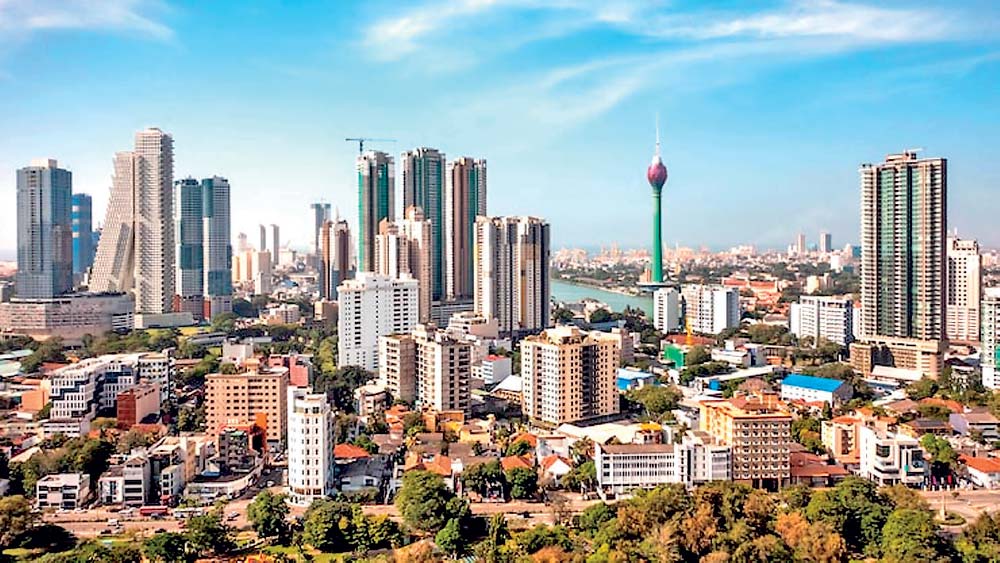
The continued upward trend in real estate prices, together with the banking sector’s increasing exposure to real estate activities, warrants continued monitoring, the Central Bank of Sri Lanka (CBSL) said, warning that a sharp correction in property prices could spill over to the financial system.
In its recent Financial Stability Review 2026, the CBSL said Asking Price Indices for land, houses and condominiums in the Colombo District, which track the prices sought by sellers against a 2019 base, continued to increase during most of the review period, with all three reaching their highest levels since 2019.
The upward movement reflected improving economic activity, elevated construction costs and sustained demand for real estate assets, supported by lower borrowing costs amid relatively accommodative monetary policy conditions, the CBSL said. However, the persistent increase in property valuations highlighted the need for continued attention given the risk of potential market imbalances.
That backdrop has since shifted. The CBSL raised the Overnight Policy Rate (OPR) by 100 basis points to 8.75% on 26 May 2026, its first policy rate increase since June 2023, which the report said contributed to further upward adjustments in market interest rates and Government securities yields.
Meanwhile, the banking sector’s exposure to real estate related activities remained elevated, with loans extended to the sector accounting for 13.7% of total loans and advances by end-June 2026. Data in the report show total exposure approaching Rs. 2 trillion by end-June 2026, growing at a double-digit pace year-on-year. This marks a strong rebound from 2024, when exposure contracted, before returning to growth in 2025.
This exposure covers loans for the purchase of land, the construction, development and renovation of residential and non-residential buildings, and real estate activities including condominium development. Growth in real estate lending was primarily driven by residential real estate activities, which account for more than 80% of the exposure, while lending to non-residential real estate activities contracted.
Asset quality in the segment improved, however. The Stage 3 loans ratio of real estate lending, which captures credit-impaired loans, declined to 10.4% by end-June 2026 from 14% a year earlier, indicating an improvement in asset quality amid credit expansion. Even so, it remained above the banking sector’s overall Stage 3 loans ratio of 9.1%.
Construction more broadly remains a pressure point. The report noted that construction, which accounts for more than 10% of total banking sector credit, was among the sectors contributing over 10% of credit expansion during the year to end 2Q 2026, and continued to record a relatively high Stage 3 loans ratio, although it declined from a year earlier. Construction-related small and medium enterprises continued to register a Stage 3 loans ratio above 20%, reflecting persistent repayment challenges.
The CBSL listed the continued rise in real estate prices among emerging domestic risks, alongside rising household indebtedness and volatility in collateral values amid increased exposure to collateral-backed lending.
“Given the linkages between the real estate market and the banking sector, a sharp correction in property prices could adversely affect collateral values and borrower repayment capacity, creating negative spillover risks to financial stability,” the CBSL said.
Source: Daily FT